
Use this page to set up your Authenticator app. These apps provide the strongest security because they work without internet or phone signal. For extra protection, your login code changes every 30 seconds
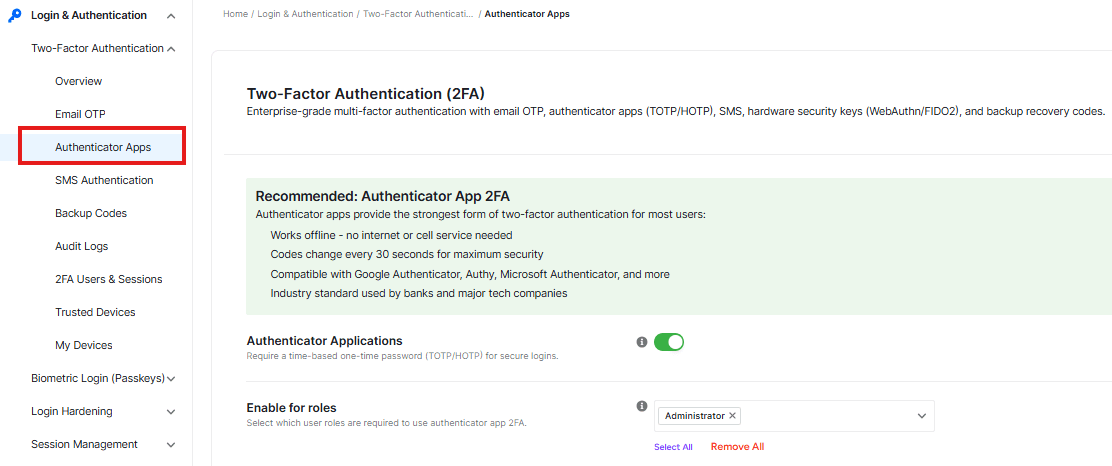
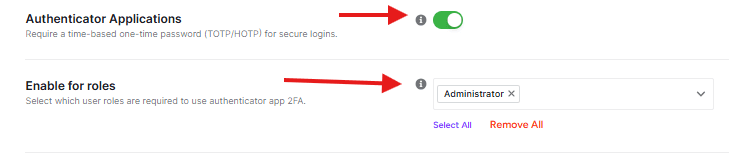
Authenticator Applications Toggle
- This switch enables or disables two-factor authentication.
Enable for Roles
- This setting allows you to select which user roles are allowed to use the Authenticator App.
Advanced Settings
This section allows you to select the algorithm used to generate your OTP. You can choose between two options:

- TOTP (Time-Based): This is the most common algorithm and is used by virtually all authenticators. It generates a new verification code every 30 seconds based on the current time.
- HOTP (Event-Based): This option generates codes based on a counter. The code only changes when an event occurs (like a login attempt), rather than based on the time.
XML-RPC
XML-RPC is a feature in WordPress that allows external services to communicate with your site remotely. You will see a dropdown menu with two specific options. This setting decides if 2FA is required when these external services try to connect.

Option 1: Do not require 2FA over XMLRPC (default).
- External tools and mobile apps can connect to your site using just a username and password. They will not be asked for a 2FA code.
Option 2: Do require 2FA over XMLRPC
- Any connection attempt via XML-RPC (including mobile apps) must provide a valid two-factor authentication code in addition to the password.
Note: Only enable this requirement if you are sure your external apps support Two-Factor Authentication, or if you do not use external apps to manage your site
Encrypt Keys in Database
This feature locks your security codes inside the database to keep them hidden. It adds an extra layer of protection so that even if a hacker gets into your database, they cannot see or steal your login secrets.

Note: Once you enable this feature, it cannot be disabled. However, it is completely safe to keep it enabled.
Important Notice:
For the highest level of security, we strongly recommend using the Authentication App method (if available) instead of Email OTP. Authentication apps generate codes offline on your device, are immune to email delays, and are virtually impossible to intercept remotely.
Prerequisites
Before you begin the setup, please download one of the following recommended authenticator apps on your mobile device:
- Google Authenticator: iOS App Store | Google Play Store
- Microsoft Authenticator: iOS App Store | Google Play Store
- 2FAS Authenticator (Open Source): Official Website
Once you have downloaded the authenticator app, follow the process below:
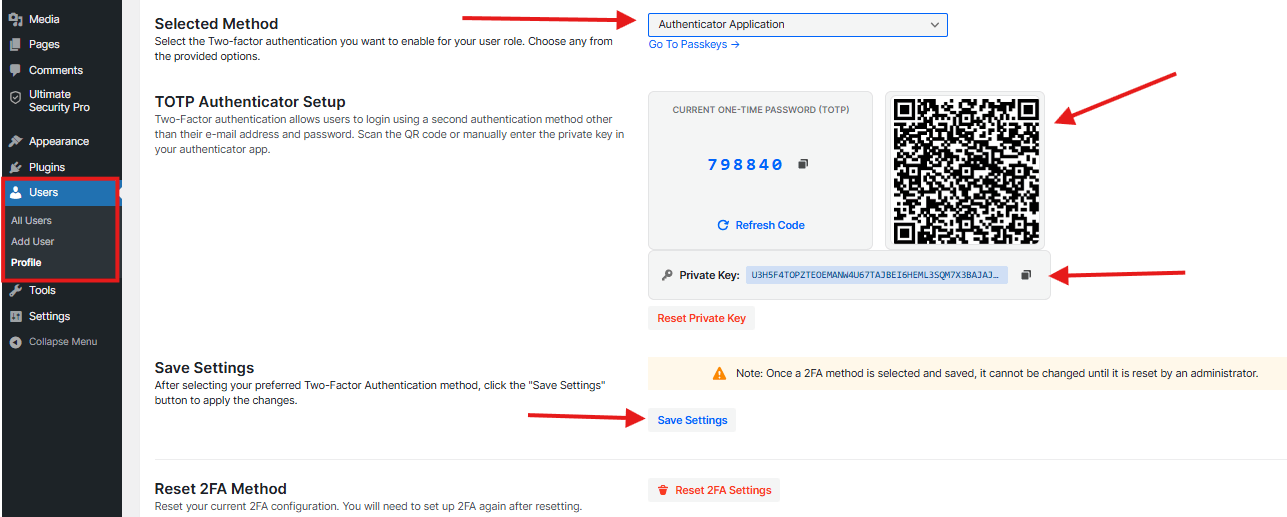
- Go to their WordPress Dashboard > Users > Profile page
- Scroll down and find the Ultimate Security
- Select the Authentication App method.
- Click Setup
- Scan the provided QR code with their preferred mobile app to finish the connection.
- Reset 2FA Method settings to restore all settings


